

The Indiana Jones epic archeological movie adventures are well known. They are just not steeped in too much reality.
So imagine Dr. Kimberly Munro’s surprise when she experienced just such a moment on her research dig in Peru in 2023.
Munro, an Assistant Professor in the New Mexico Highlands University’s Department of Sociology, Anthropology and Criminal Justice, recently earned a prestigious American Postdoctoral Research Leave Fellowship from the American Association of University Women.
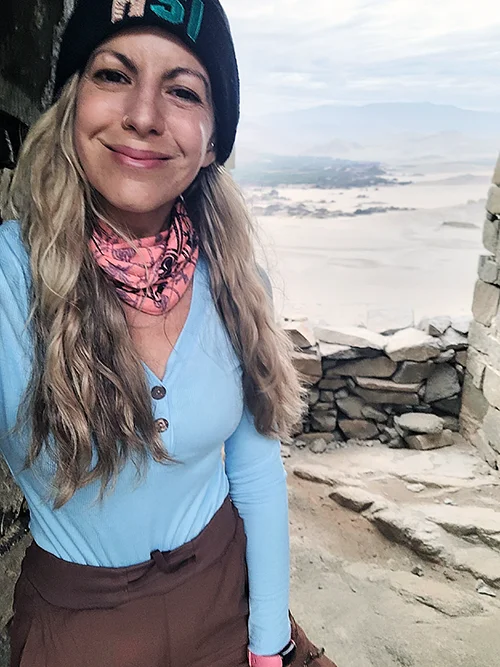
The fellowship, established in 1888, is the oldest non-institutional source of graduate and postdoctoral funding for women in the United States. It is designed to increase the number of women in tenure-track faculty positions and promotes gender equity for women in higher education by providing funding to women in academia to pursue independent research over the course of a year, according to the organization’s website.
“I’m really grateful for this opportunity, and hopefully I can be a resource, to other women and young girls,” Munro said. “Growing up in a low-income, one-parent household, and the daughter of South American immigrants, I didn’t even think graduate school was an option for me, let alone getting my PhD and one day being a professor running my own project.”
It’s been a rewarding experience given her background.
“It’s especially meaningful since my mother is Peruvian, so getting to keep that connection with my heritage is really rewarding.” Munro said. “It’s opportunities like the AAUW that allow for more representation of women in our fields, especially in STEM (Science, Technology, Engineering, Mathematics). Sometimes seeing people in your discipline who look like you, or come from similar backgrounds is motivation to keep moving forward in your studies, field work, etc. I’m grateful to all the inspiring women mentors I had to look up to, I know this project or field work wouldn’t be happening without them, the AAUW and everyone supporting this, so I hope to be able to pay it all forward in my field and through Highlands.
The $50,000 stipend will fund Munro’s research through next summer, with a continued focus on the Cosma Archeological Project and surrounding highland basin, located on the western flank of the Andean Mountains in north-central Peru.
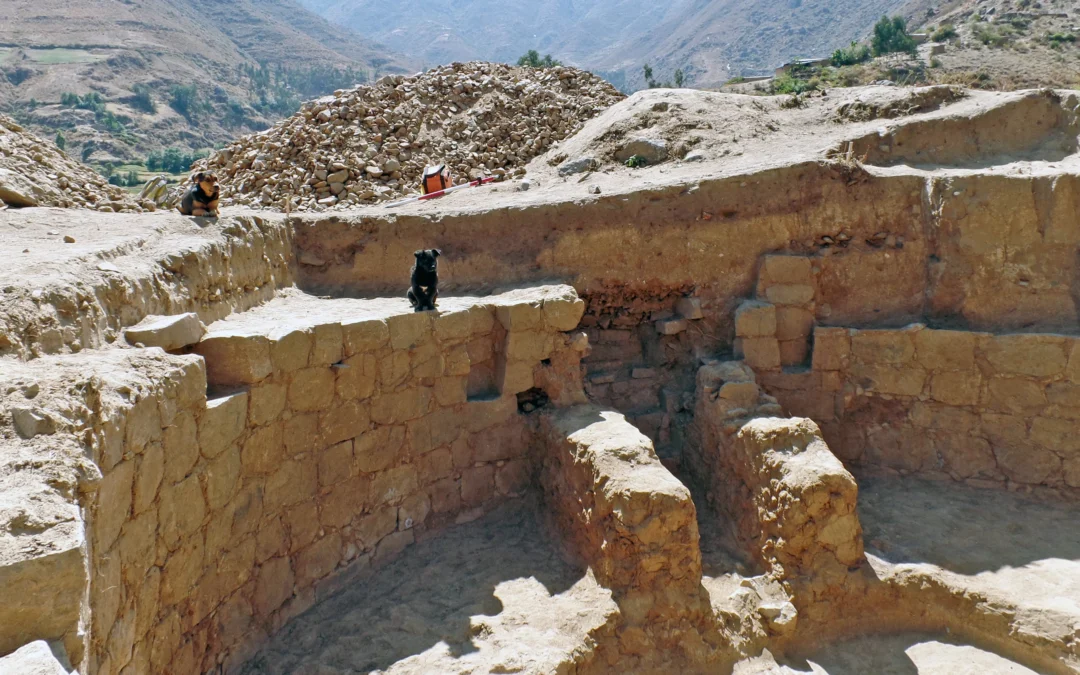
The Cosma Complex, an early religious pilgrimage site, is a large, multi-component center located in the Cordillera Negra mountain range of the Andes, in the upper Nepeña River Valley of Peru. The site itself extends over 250 hectares and includes two large platform mounds, prehistoric terraces, a hilltop fortress, Inca carved stone works, and a number of tombs and sacred stones embedded throughout the landscape, Munro’s website showed.
Excavations in Cosma started in 2014, and over the last 11 field seasons, have revealed that Cosma was initially established during the Andean late Pre-ceramic, with the current, earliest radiocarbon dating the Acshipuco to mound to 2900 BCE.
Munro has been excavating the two platform mounds, but shifted primary focus to the larger mound, known as Kareyco to in 2023, when she had her “Indy” moment, or surprise discovery.
“This hole kind of showed up in the unit, and sometimes you get these little collapse features while you’re digging, and usually it’s because there’s a pot underneath that’s kind of causing that air pocket,” she explained. “But we had just dug through what we knew was a late, pre-ceramic floor from the past seasons. We kind of had that same framework to go off of, and so there’s no way it could be a pot, because they didn’t have ceramics at that point in time. So it’s just this weird thing.”
That weird thing turned out to be a tunnel. Cue the spooky music.
“I stuck my cell phone camera in the hole and kind of did a video recording, and turned it around 360 degrees and when I looked, I was like, there’s a tunnel,” she recalled. “It goes both ways. So it was completely unexpected.”
Munro had no intentions of letting anybody else get first dibs on the find.
“It was one of those things where I was so excited that by the time we opened up that hole enough that someone could crawl through, I was like, ‘I’m the director of the project. I’m the captain of this ship. I’m going down there,’” she said with a smile. “And also, I’m one of the smaller people so I could fit in the hole. And so I just kind of dove in, feet first, and then I was inside. And then I was thinking, this thing hasn’t been opened in like 5,000 years. And you can see little rocks, kind of pebbles, falling from the ceiling. And I was thinking this is probably not the most structurally sound thing, but it held up.”
It sure seemed like it was something straight out of Hollywood.
“Except there were no boulders, no booby traps and no Nazis,” Munro said with a straight face.
Thankfully, one of her other concerns also proved to be unfounded, at least to this point.
“We didn’t know if it was going to be a gallery system, or if it was because when I first took the video recording, just sticking my hand in, all I saw was the tunnel, the shaft of this structure,” Munro recalled. “And in the Andes, sometimes in the past, they would have these gallery tombs. And so I didn’t know if it was going to be like an actual tomb chamber, and we were going to find bodies down there, like these mummy bundles, or if it was going to be one of these gallery systems. So I’m happy it wasn’t burials.”
But the complexity and total dimensions of the tunnel still remains very much a mystery as minimal funding in the summer of 2024 only allowed for smaller scale work at the site.. And with the tunnel so high in the structure, there’s no telling what further excavation will reveal as the original access point to the gallery tunnel is closed off because of rock collapse, but the current dimensions of the section is about 30 feet by 23 feet by 11½ feet and branches off into separate chambers.
What’s more, she said, there have been examples of these rare Chavín-style tunnel systems that are sometimes stepped, leading downward. Should that be the case, it could lead to a whole labyrinth system.
Additionally, the whole discovery is breaking new ground as the tunnel systems were not believed to have been that old.
“So this is kind of pushing the timeline of these kinds of architectural features back over 1,000 years,” Munro said. “It’s really exciting.”
What’s also really exciting is the thought of what this grant means not only to Munro, but to New Mexico Highlands, which gets to bask in her reflected limelight a bit.
While she plans to remain Peru until the grant money runs out, Munro also will teach a couple of classes remotely. And that, in of itself, will present something of a novel experience for her students.
This also could be the start of an expanded teaching/learning moment for Highlands’ students.
“I did do a couple of archeological field camps, and I brought undergrad students down, just four or five students at a time, for about six weeks,” she said of her time at Louisiana State University, where she was working on her doctorate. “And they all really enjoyed it. So I’m hoping, since I’m going to be down there for a long period of time, that I can establish another field-based program to bring students to the site for a field school.”
It would certainly be a coup for Highlands, as well as her students.
“I think we would be the only school in New Mexico to have a field program like that in Peru,” she said. “So hopefully I can get I can get it going. It just depends on students’ comfort levels. For instance, they’ll be sleeping on a hay mattress. Yeah, it’s definitely going to be glamping, but the food is good.”
Whether or not that comes to fruition, the remote teaching will add even more real-life applications into her lectures.
“Especially in archeological theory, when we start talking about things like agency and personhood, especially when we talk about the agency and effects of the mound,” Munro said. “So I do integrate that into the lectures, and same with the applied anthropology and qualitative methods class, just because when you’re working with local, living communities, you’re doing a lot of ethnography. So I do use a lot of examples from work.”
Now with a full year to really delve into field work, Munro is looking to make some real progress, particularly since the underground gallery discovery may have been the tipping point in her getting the grant.
“The work I am doing, I always thought it was interesting and important and has merit. But getting a fellowship like this makes it feel like other people believe in this too,” she said. “Validates it, yeah. and not just for me, but for the community and for the mounds like this is, I don’t know, it just kind of warms my heart a little bit that every year you kind of hope you get funding and can continue excavating and but it’s all dependent on how much money you get. So I’m just really grateful and humbled because I know a lot of female academics and archeologists who are working in Peru as well who applied for this opportunity. And they’re just as deserving as I am, but I want to say that maybe the mound had some influence.”
Again, a win for Munro and for Highlands.
“There are just so many data gaps that we don’t really know about, and it’s very hard to fund archeological projects and research, especially at smaller institutions,” she said. “Most of the big grant funding goes to larger schools like University of New Mexico; the larger state schools and, of course, Ivy Leagues. Though, funding is getting harder to come by now.”
And this grant will allow her to expand her research significantly, while also shining a light on Highlands.
“I hope it’s a good thing,” Munro said. “I think that there’s a lot of professors at Highlands who are doing really, really interesting and impressive stuff. In April, we had our faculty research day and just sitting in on those talks, we’re just a small school, but that doesn’t mean we’re not doing big things and great things. There’s a lot of people doing really, really interesting things. So hopefully it’ll, maybe, I don’t know, tip the scales in our favor, so that more granting institutions will look at us and say, ‘Hey, they’re small, but they’re mighty.’”
The bottom line, however, is Munro’s research bottom line is stable for the next year as she looks, in part, to make a connection between the past and the present.
“You see a lot of these themes that people in the Andes today who still practice traditional Andean religious or rites of passage there,” Munro said. “They’re still utilizing a lot of these same religious frameworks. And so with this site, now that we know we have these circular chambers and this underground gallery system that is similar to what has been found at the site of Chavín, the ones that should be, we know were used for religious rites of practice, for specifically for shamanic, transformative rituals. And so they were using these tunnels to go basically underground to the underworld, after taking the hallucinogenic San Pedro cactus to kind of become the Jaguar and kind of go into these shamanic trances. And so we know that this was happening at this site specifically.”
But, there is more to it than that, she said.
“I think every researcher thinks the work that they’re doing is really impressive and important,” she said. “I think what we have in Cosma, or what Cosma is, I don’t want to say it’s one of a kind, but I think every site is one of a kind, but it is special. We don’t have this kind of architecture this early that we know about at very many sites and we’re only four meters deep. The platform mound goes down 18 meters that we know about. And so I feel like the momentum of finding the underground tunnel and knowing it’s there is obviously tempting to want to excavate it right away.”
For more information on the project, and updates: Andeanbecomings.orgor follow Munro at@the.field.professor on Instagram.